

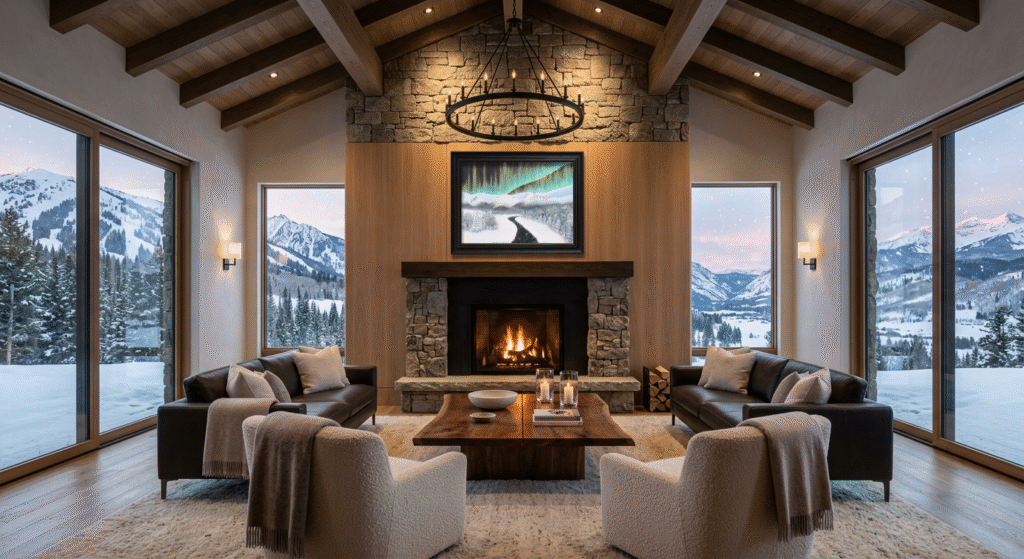
There’s a fine line between creating a beautiful lodge-inspired living room and making your house look like you bought everything in the rustic section of the same store.
I love rustic interiors, but I think they work best when they feel collected rather than themed.
Natural wood, stone, comfortable furniture, artwork and pieces with some history can create a room that feels warm and inviting without requiring antlers on every available surface.
And you don’t need an actual cabin to do it.
A lodge-inspired living room can work just as well in a suburban home if what you’re really after is the warmth, texture and connection to nature that makes these spaces so appealing.
Start With What You Already Have
Before buying anything, look at the permanent features of the room.
Do you have wood floors? A fireplace? Exposed beams? Large windows? A great view? Older furniture with character?
Those things can become your starting point.
If you have a stone fireplace, for example, let it be important. Don’t surround it with so many decorative objects that nobody notices the fireplace anymore.
If your room doesn’t have any obviously rustic architectural features, that’s okay. You can bring in that character through furniture, textiles, artwork and natural materials instead.
You don’t need to install a log wall to prove your commitment.
Mix Natural Materials
Wood and stone are probably the materials most associated with lodge interiors, but you don’t have to stop there.
Leather, wool, linen, woven baskets, pottery and other natural textures can keep a room from feeling flat.
And I wouldn’t make everything match.
Different wood tones can work together. An old table can sit beside a newer sofa. A smooth stone fireplace can contrast with a chunky woven blanket.
Those differences are what give the room character.
Nature isn’t particularly concerned with matching either.
Choose Colors From Places You Actually Love
Lodge interiors are often associated with brown, cream, green and other earthy colors, but that’s only one option.
Look at the landscapes you’re drawn to.
If you love forests, maybe deep greens make sense. If you’re inspired by lakes and mountains, blues and grays might feel more natural. Autumn brings rust, gold and orange. Northern skies can introduce beautiful blues and purples.
You don’t have to paint every wall a dramatic color to use these shades.
They can show up in artwork, pillows, blankets, rugs and smaller details throughout the room.
Personally, I’d rather build a palette around a landscape I love than around whatever color somebody declared fashionable this year.
Let the Artwork Have Some Room
This is one area where I definitely have opinions.
If you have a beautiful original painting, give it enough space to be seen.
You don’t necessarily need twelve smaller objects surrounding it.
A landscape over a fireplace or sofa can become the focal point of the room. Wildlife art can work beautifully against natural wood or stone. Smaller paintings can create interesting moments in reading corners or between architectural features.
And don’t feel obligated to match the subject of the artwork perfectly to the house.
You can hang a northern-lights painting in a lakeside cabin. You can put wildlife art in a suburban living room. You can hang an ocean painting in New Hampshire.
The art police aren’t coming.
Choose something you actually want to look at.
Make the Furniture Comfortable Enough to Use
A living room should be livable.
This seems obvious, but we’ve all seen beautiful rooms where the furniture looks like nobody is allowed to sit on it.
Lodge-inspired spaces should invite people in.
Comfortable seating, blankets, good lighting and places to put a drink matter just as much as how the room photographs.
Think about how you actually use the space.
Do people gather around the fireplace? Watch movies? Read? Play games? Have friends over?
Design around real life rather than creating a room everyone is afraid to disturb.
Add Character Instead of Clutter
Rustic decorating can go sideways pretty quickly when every empty surface becomes an opportunity for another themed object.
You don’t need to fill every shelf.
Instead, choose things that have some meaning or character: an old basket, handmade pottery, books, something collected while traveling, an interesting piece of wood, family photographs or objects you’ve owned for years.
I’d rather see five things with a story than fifty things purchased because they were labeled rustic.
That’s what makes a room feel personal instead of staged.
Don’t Forget the Lighting
Lighting can completely change how a lodge-style room feels at night.
During the day, take advantage of natural light whenever you have it. At night, use multiple sources of light instead of relying entirely on one bright fixture in the middle of the ceiling.
Table lamps, floor lamps, fireplace light and softer accent lighting can make a large room feel much more comfortable.
It also matters for artwork.
If you have a painting you love, make sure you can actually see it after the sun goes down.
Bring in Nature Without Turning the Room Into a Theme
Plants, branches, flowers, stone, wood and artwork are all easy ways to reference the outdoors.
But you don’t need all of them everywhere.
This is where restraint can make the room feel more sophisticated.
One large landscape may say more than six little signs about going to the lake.
A beautiful piece of wood furniture may be enough without adding pinecones to every table.
And if you already have an incredible view outside the window, sometimes the smartest decorating decision is simply not blocking it.
Create a Room That Looks Like You Live There
The lodge-style rooms I find most appealing aren’t perfect.
They look comfortable.
There’s a blanket somebody actually uses. Books aren’t arranged according to color. The furniture doesn’t all belong to the same collection. There’s artwork on the wall because somebody loves it.
That’s the difference between creating a lodge-inspired home and creating a lodge-themed display.
Use natural materials. Choose colors you love. Invest in artwork that means something to you. Make the furniture comfortable. Leave enough room for the individual pieces to have some presence.
Then actually live in it.
Because the best living room isn’t the one your guests are afraid to touch.
It’s the one where everybody ends up staying longer than they planned.
Discover More Original Artwork
“Every painting in my collection is inspired by the places, memories, and moments that remind us to slow down, breathe deeply, and reconnect with the natural world.”